Setup
Two teams of three spawn on opposite sides of the arena. The Power Ball appears at the center of the field.
Case study · 2022—2024
A fast-paced 3v3 multiplayer hero shooter built around a competitive ball objective.
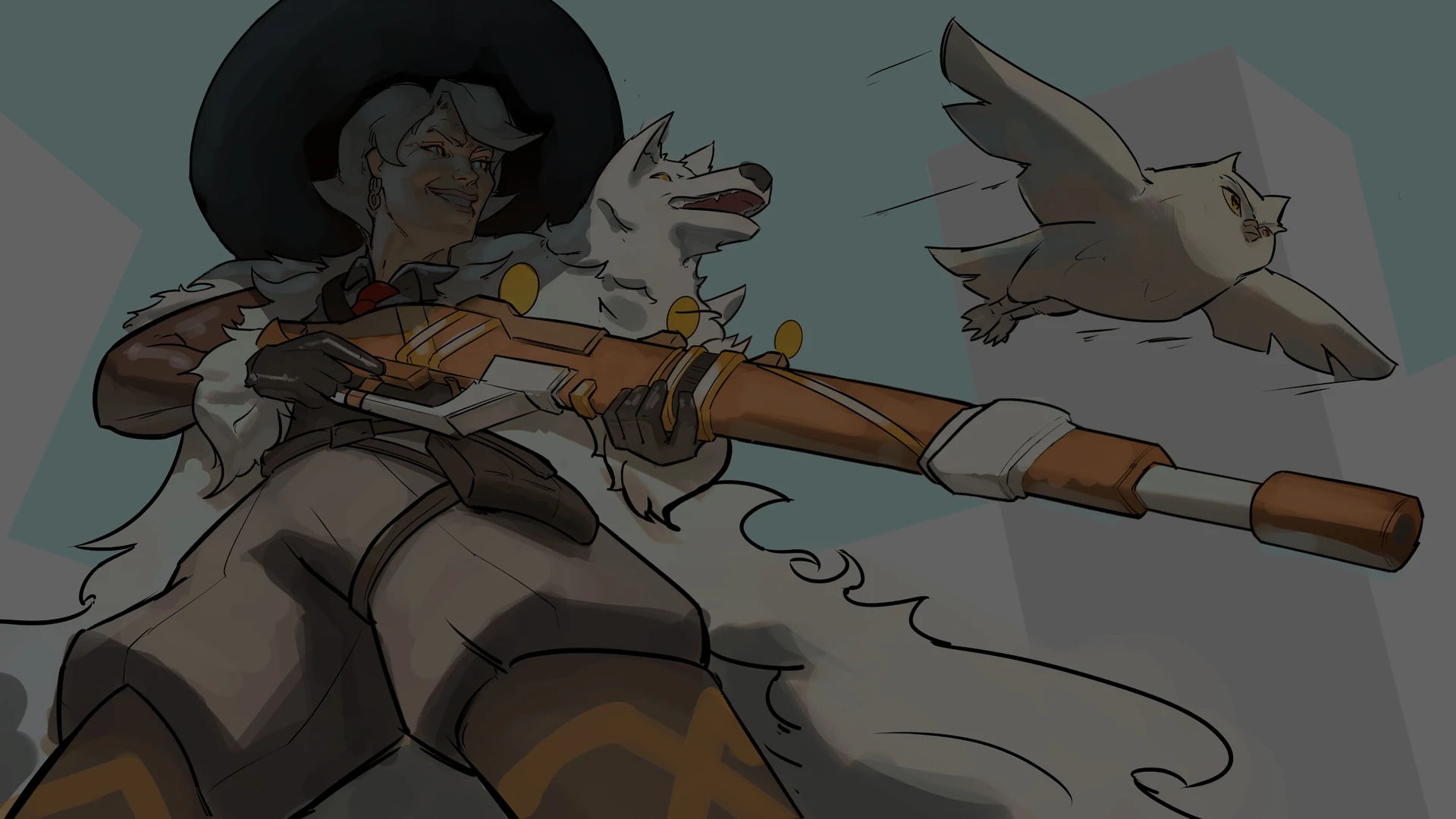
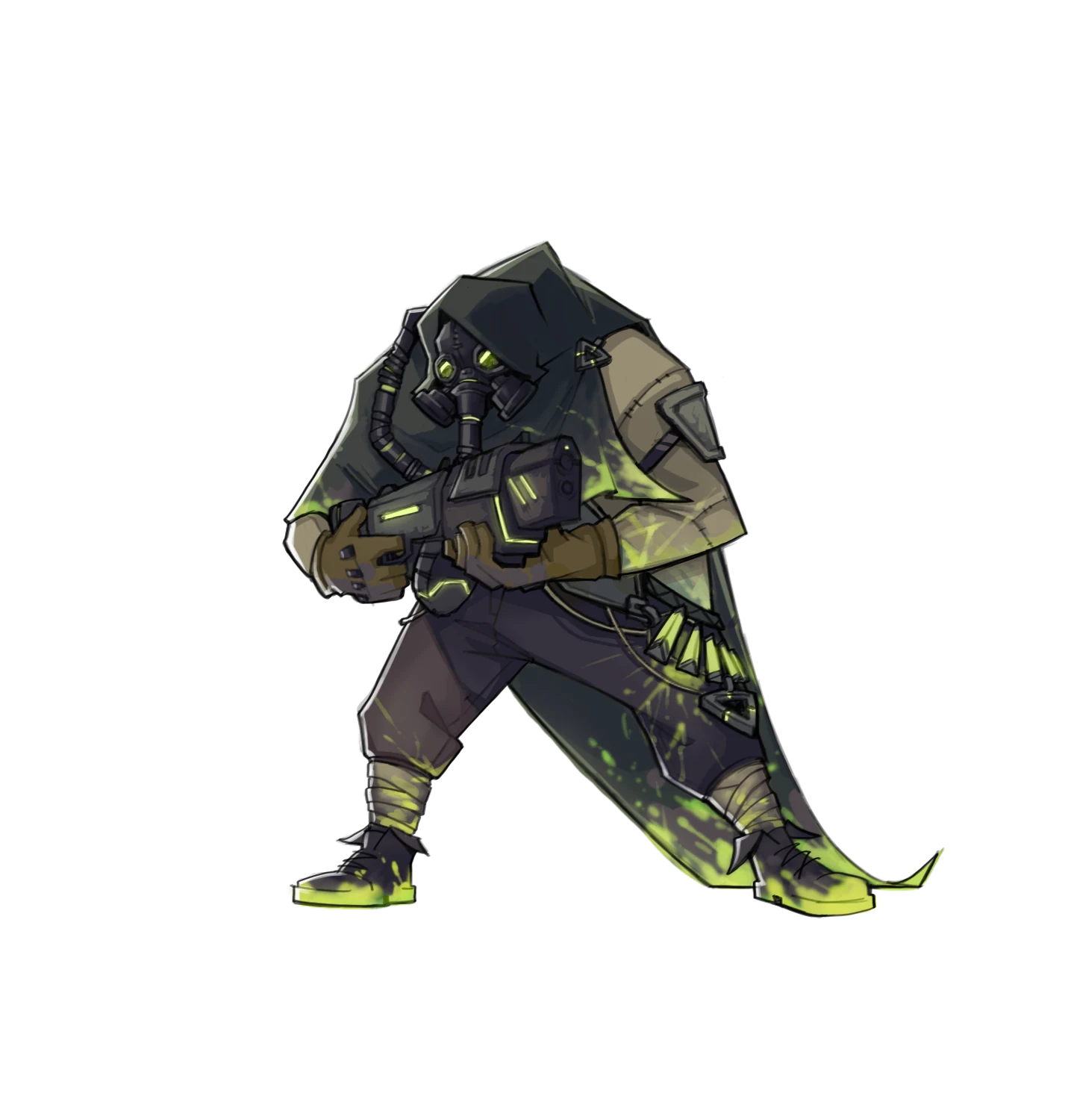
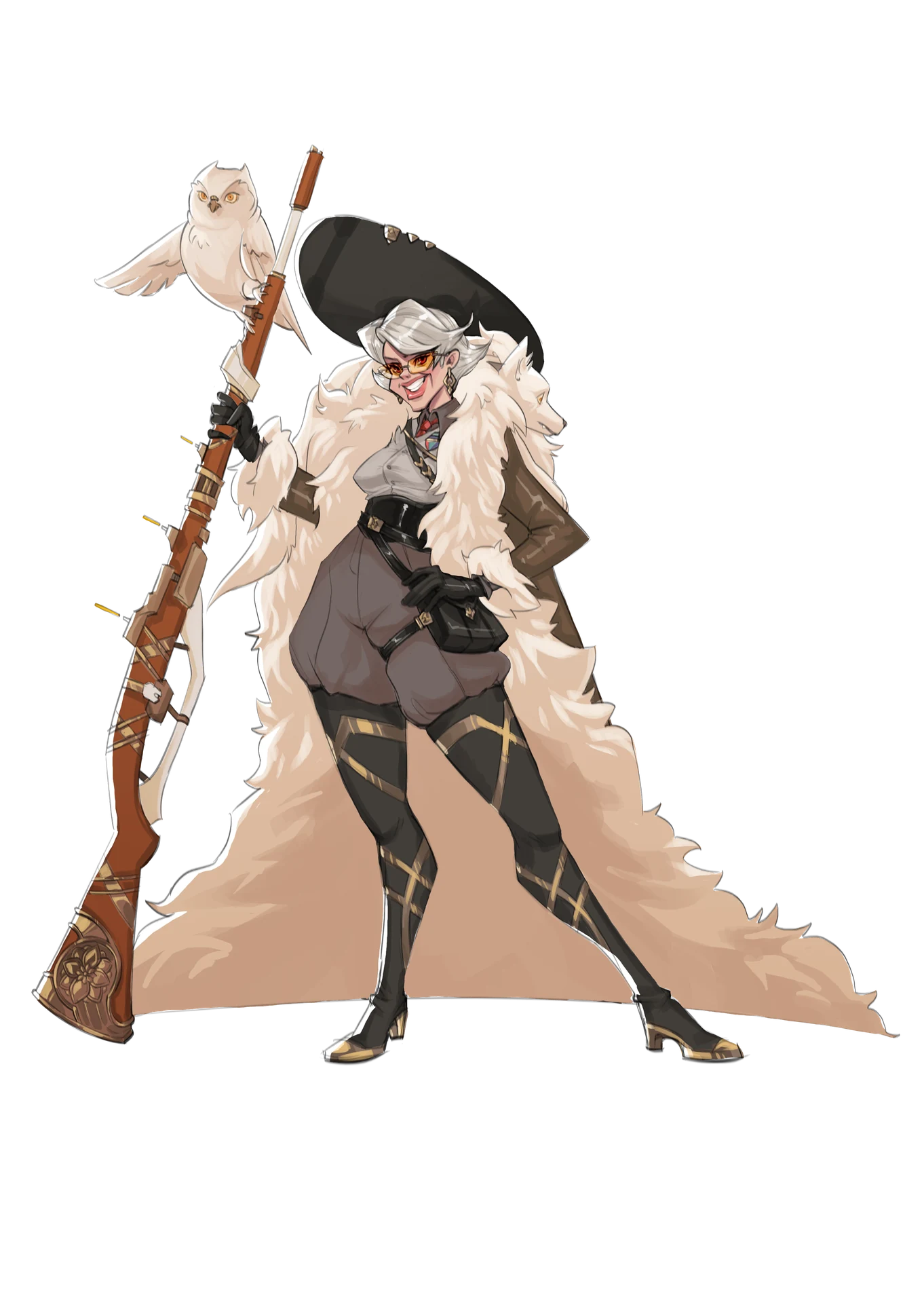
Character illustration by Sydney Price · Character co-designed with Teri Zhang for Ring City Champions.
01 / Match premise
In a futuristic coliseum, two teams of three compete to control the Power Ball and escort it into the opposing goal.
Players select Champions with distinct abilities, movement, and combat styles. A round can be won by sending the Power Ball into the opposing team’s goal or by eliminating the whole opposing team.
As project lead and game design lead, I created the original game design document, defined the game pillars and core mechanics, and worked with the team from pitch through production.
Gameplay video
Original Ring City Champions gameplay capture. The case study below describes the mechanics and design decisions shown in the capture.
02 / Core game mechanic
The match is built around a contested Power Ball: secure it, create an opening, and convert that control into a point.
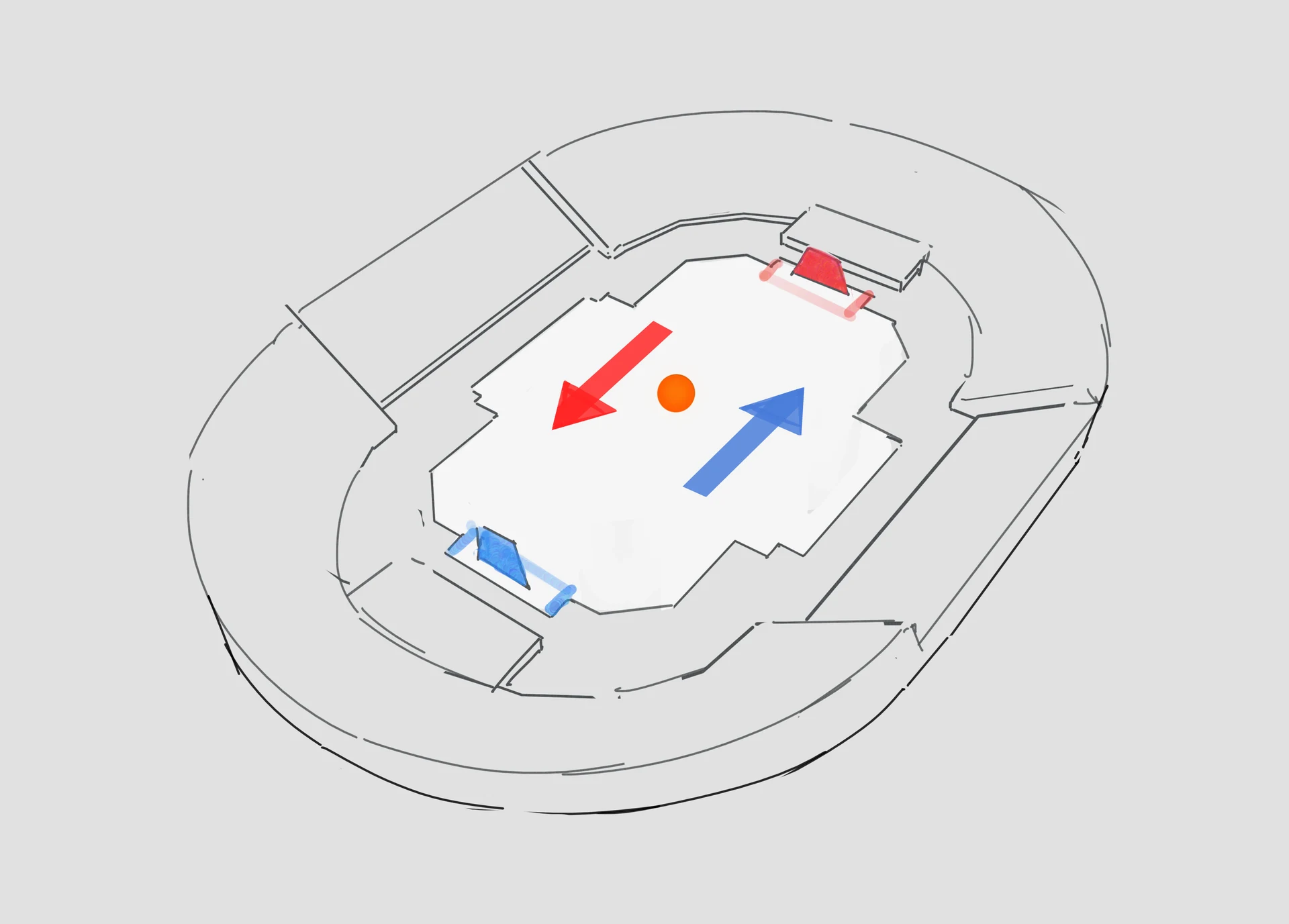
The original system design defines a round through four connected states.
Two teams of three spawn on opposite sides of the arena. The Power Ball appears at the center of the field.
Picking it up reveals the holder’s location to the entire enemy team. If the holder is eliminated, the ball drops and becomes contestable.
The holder can shoot the Power Ball forward. A ball that reaches the opposing goal awards a point and resets the arena.
Eliminating all three opposing players simultaneously awards a point and resets the round.
03 / Round system
A match is organized into two halves, with overtime if the score is tied. Each round returns players to the same contested objective, so tactical choices reset while the score carries forward.
Send the Power Ball into the opposing team’s goal to score and reset the arena.
Eliminate all three opposing players simultaneously to claim the point.
If both teams are tied after two halves, the match continues into overtime.
04 / Level design
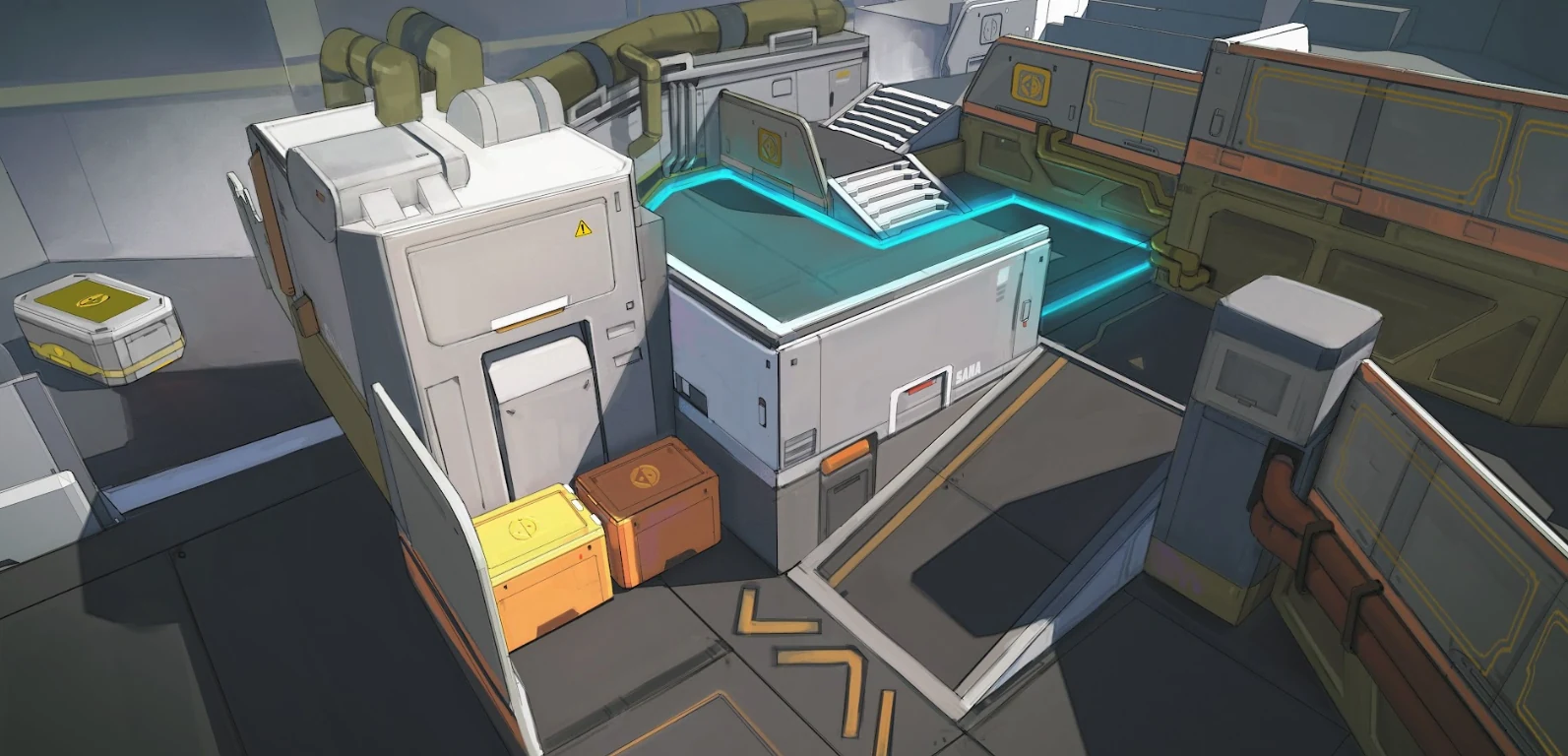
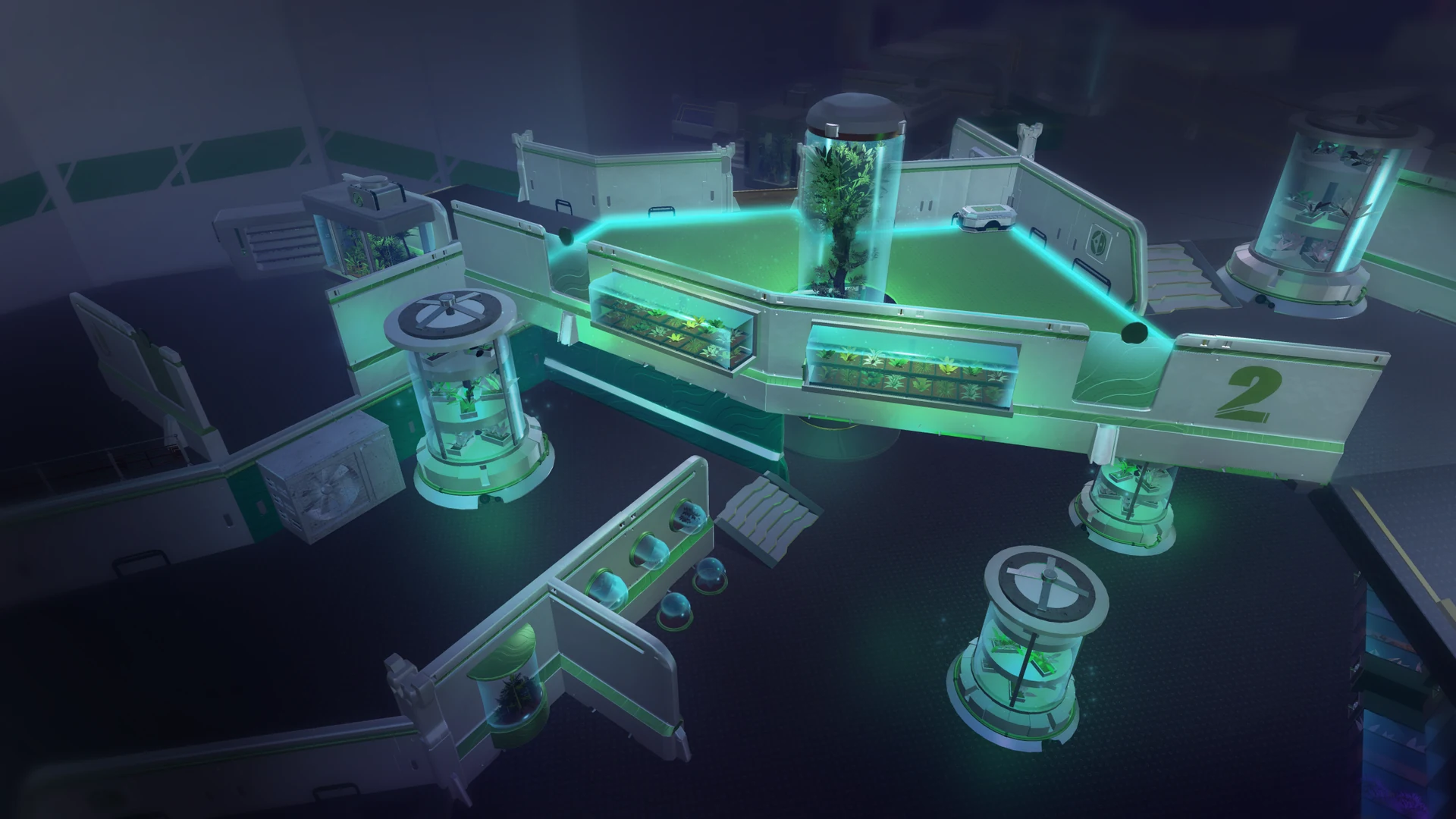
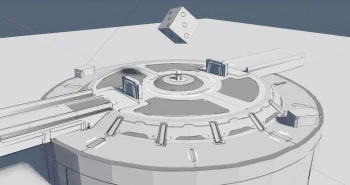
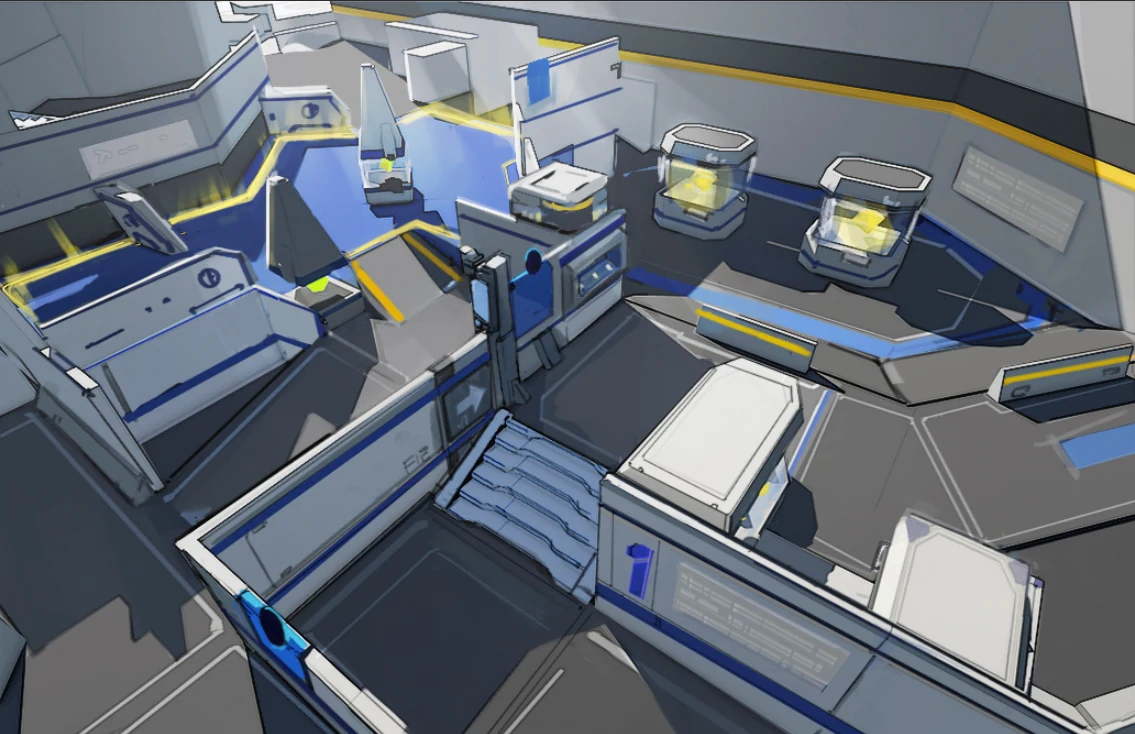
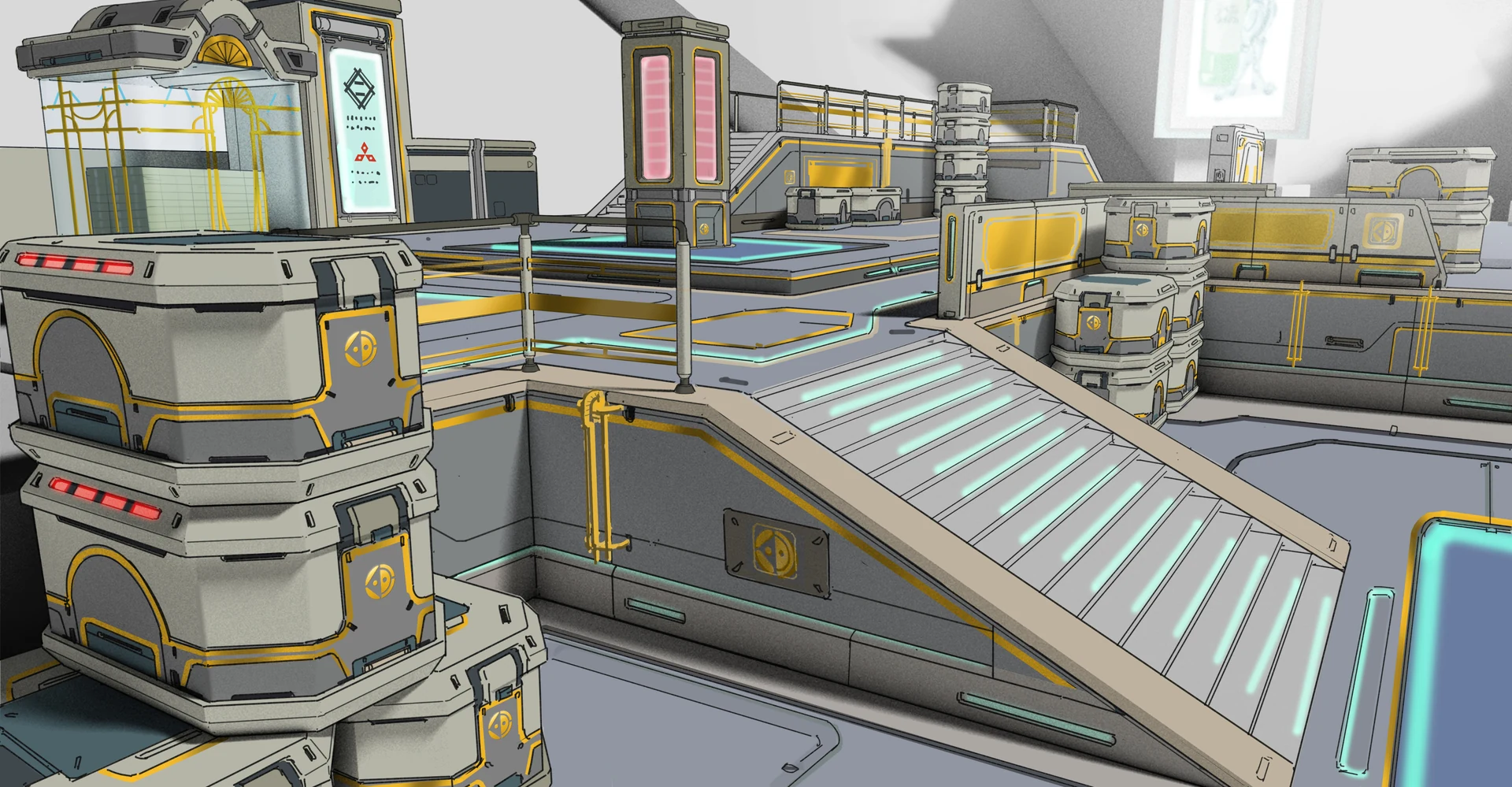
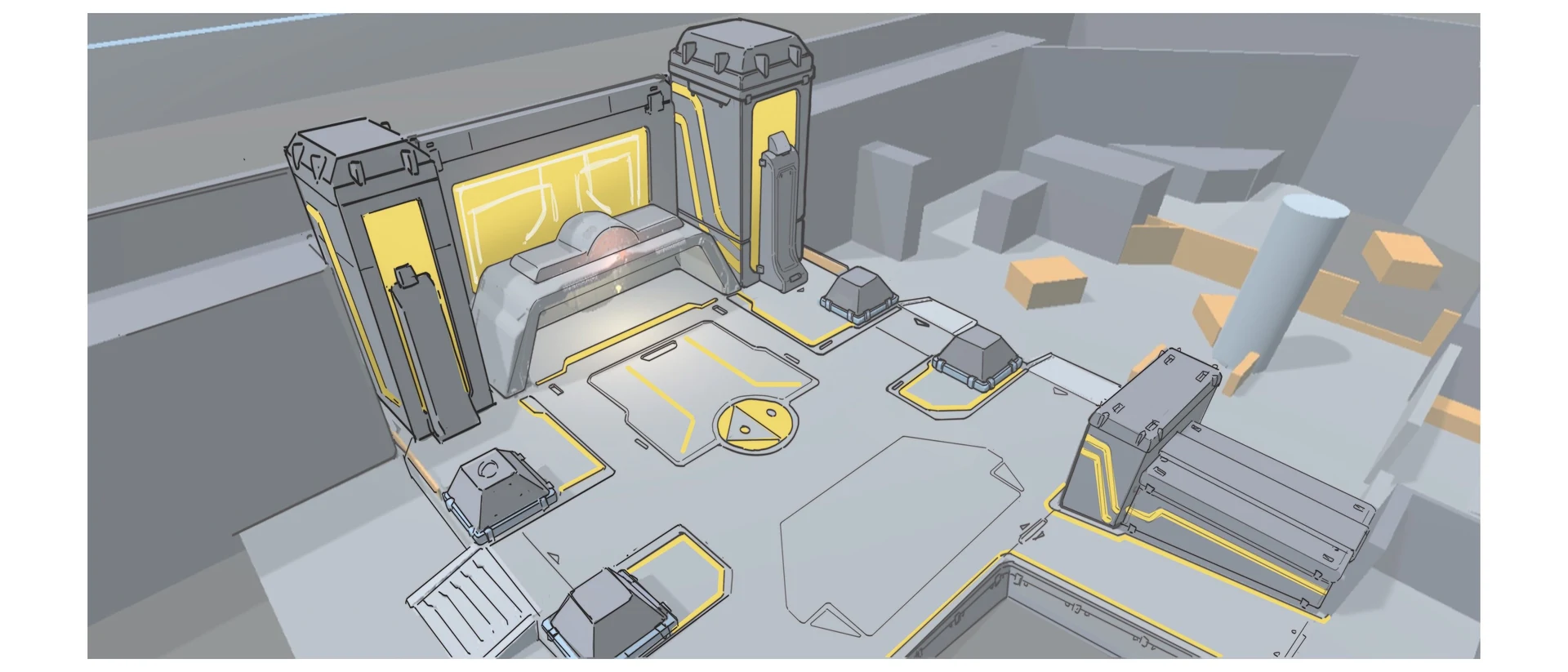
The arena uses a symmetrical layout so both teams begin with equivalent terrain and routes. Different areas support different playstyles: elevated positions create high-ground opportunities, while the objective and routes keep teams moving together.
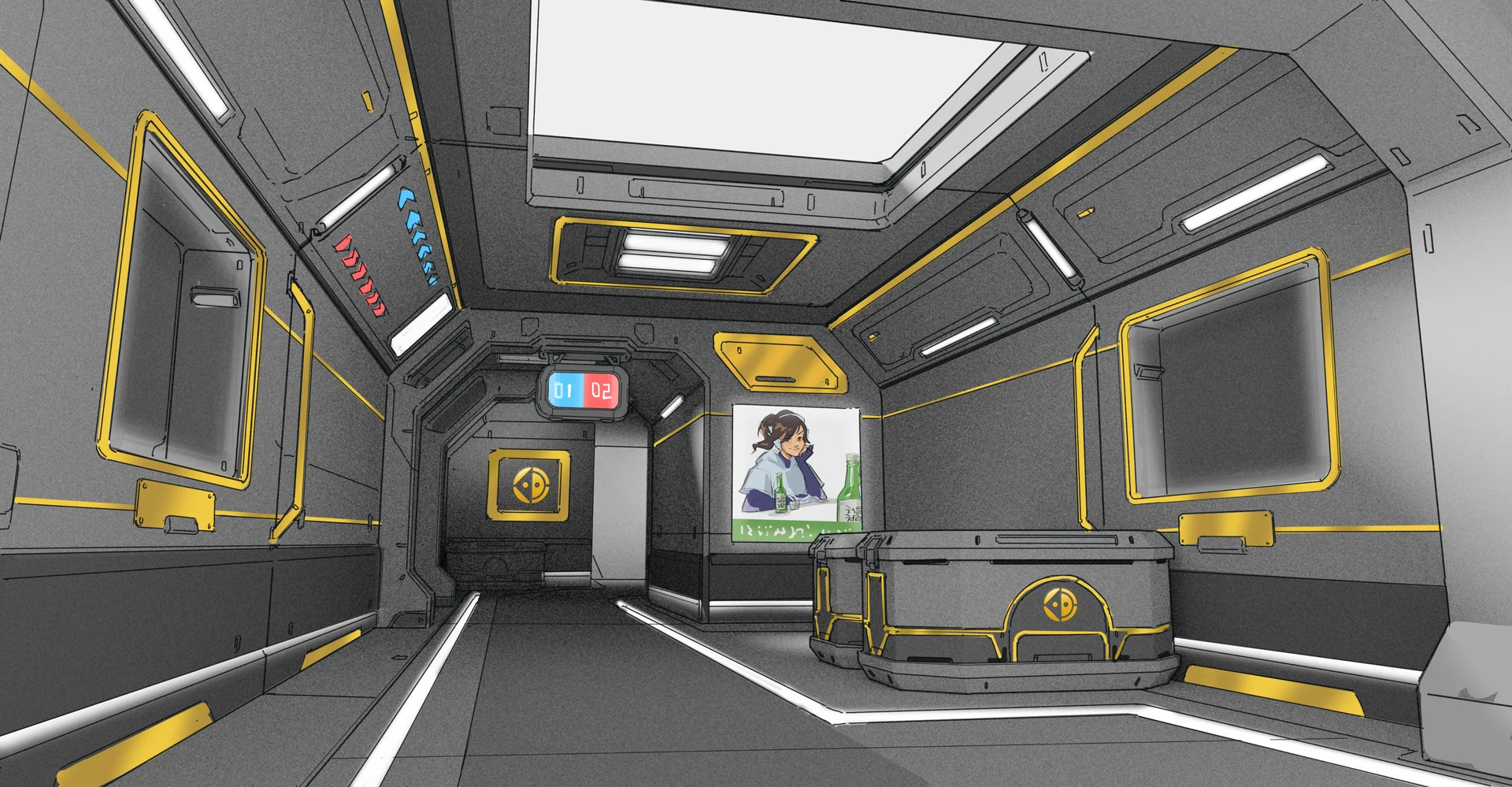
05 / Champion system
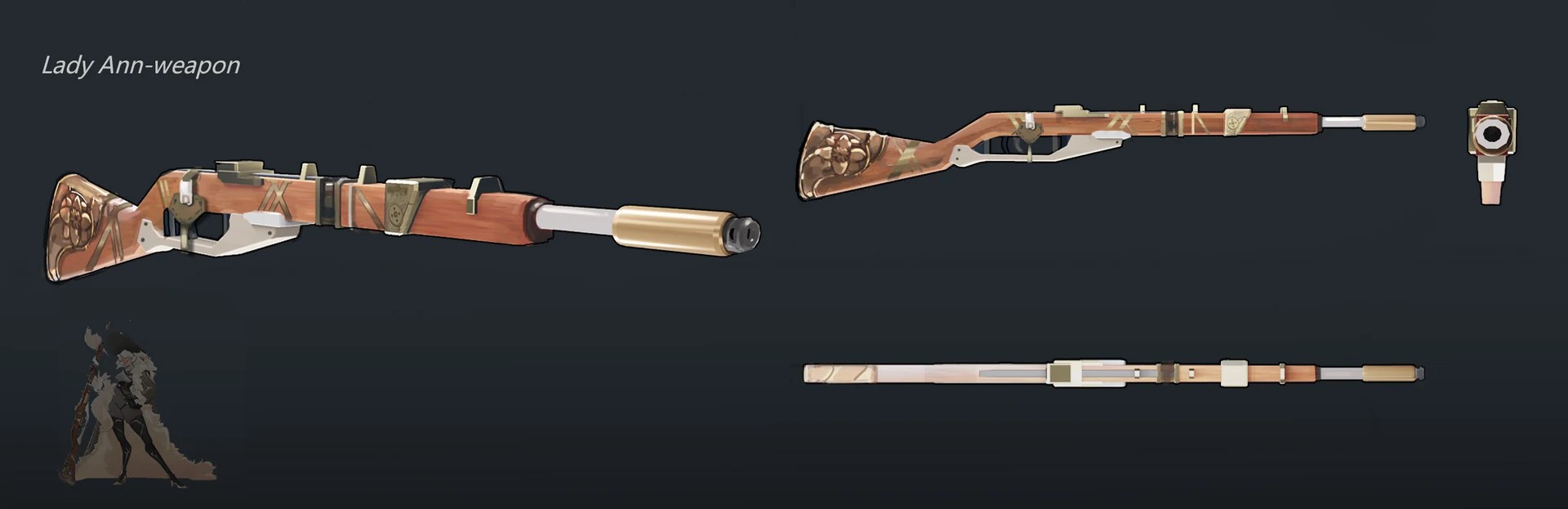
Each Champion is defined by a weapon, ability kit, and base stats. Together, the roles support a range of team compositions.
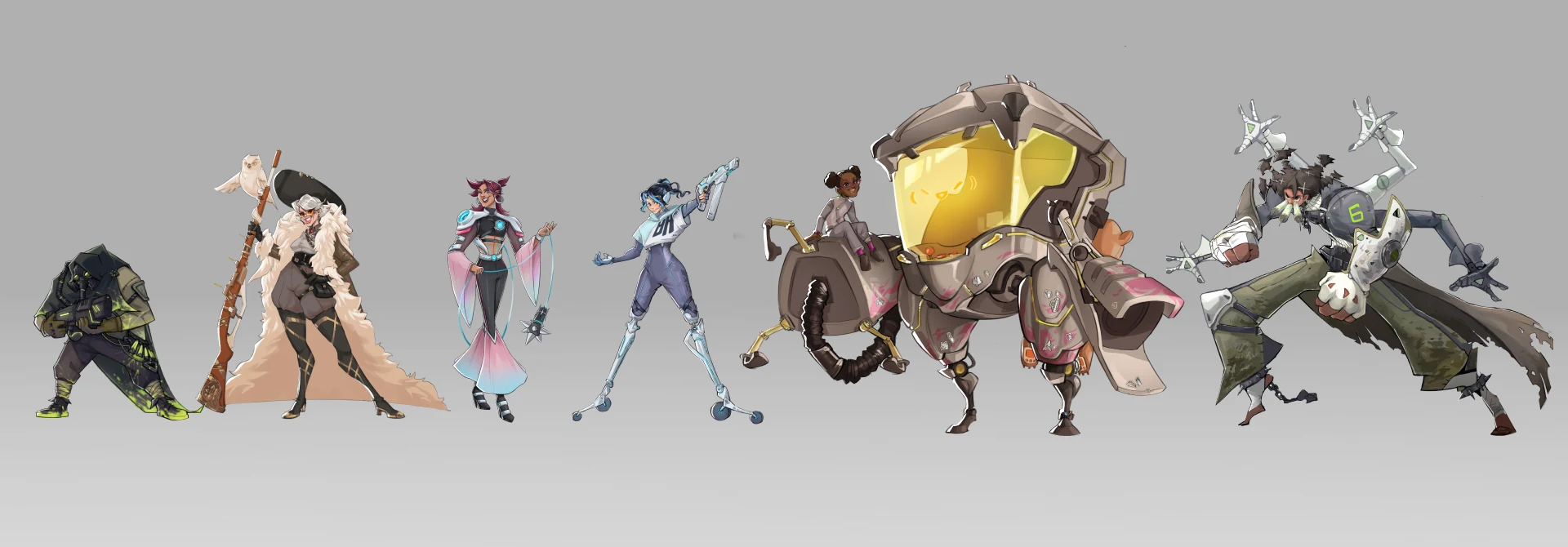
 Brawler
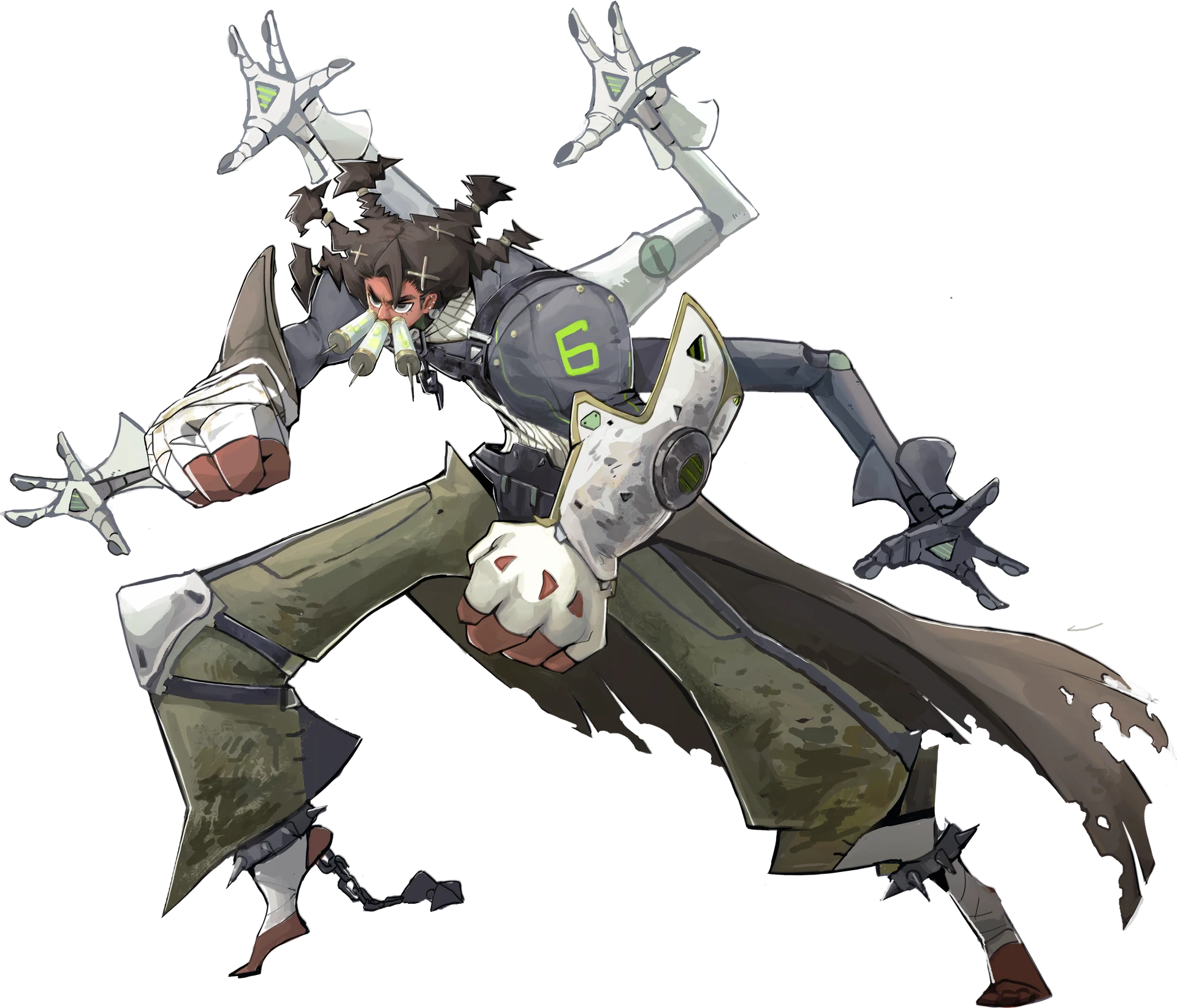
A close-range fighter designed to win one-on-one duels and clear space around the objective.
 Defender
A tank role that creates safety for allies, blocks attacks with shields, and protects the goal.
 Sniper
A long-range assassin that punishes exposed targets and forces enemy positioning.
 Striker
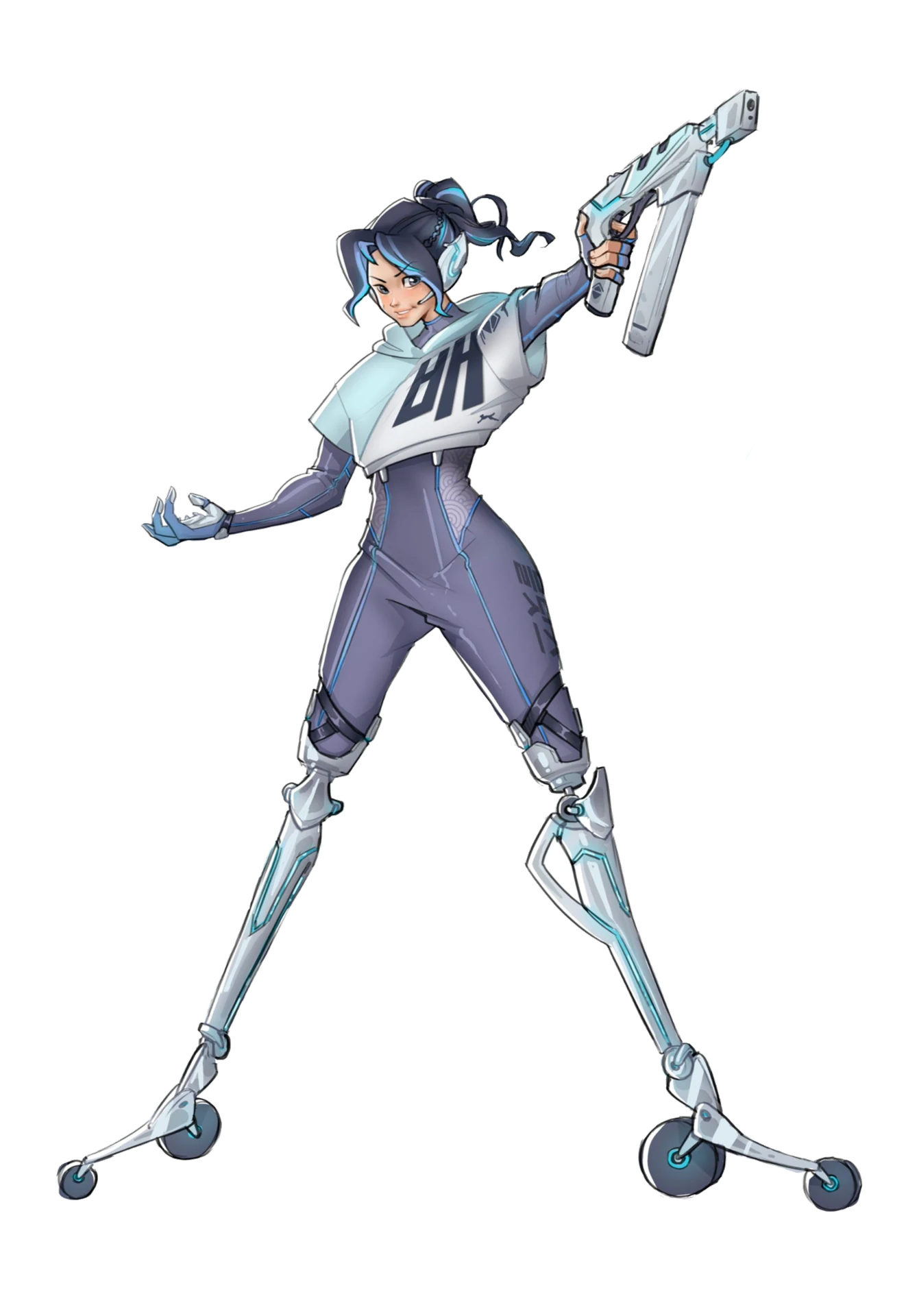
A high-mobility role that flanks, bursts targets, and evades enemies.
Damage and durability separate the role identities.
The second axis shows the complementary trade-offs across the roster.
06 / Character ability system
Every Champion combines a unique weapon with four abilities that create distinct movement, combat, and teamwork choices.
An ability that remains active without a cooldown or resource cost.
The first manually activated tool, designed around information, damage, or area control.
A second cooldown-based option that extends a Champion’s tactical choices.
Built through action, damage, and scoring; powerful enough to be used only a few times per match.
07 / Champion ability design
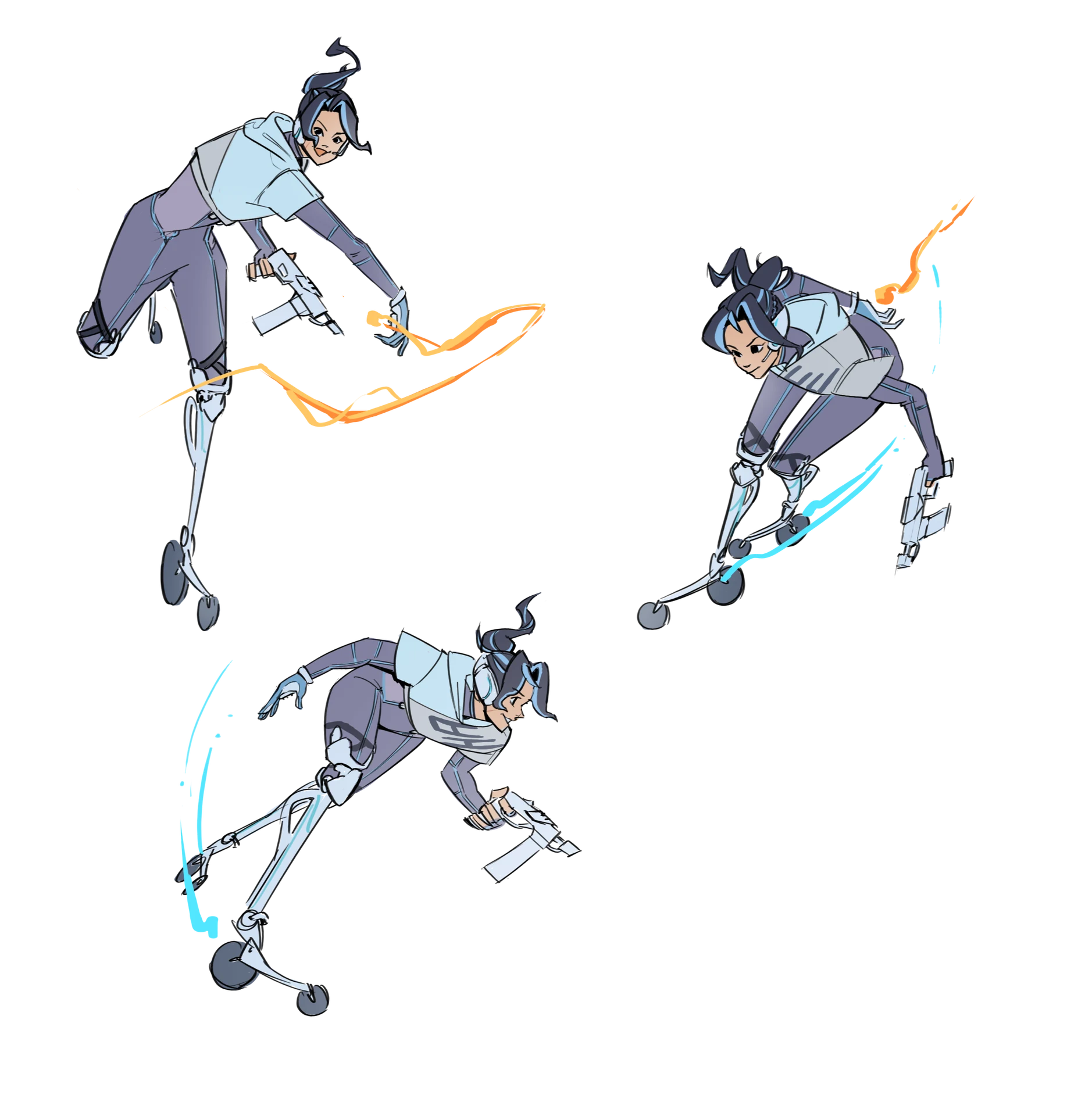
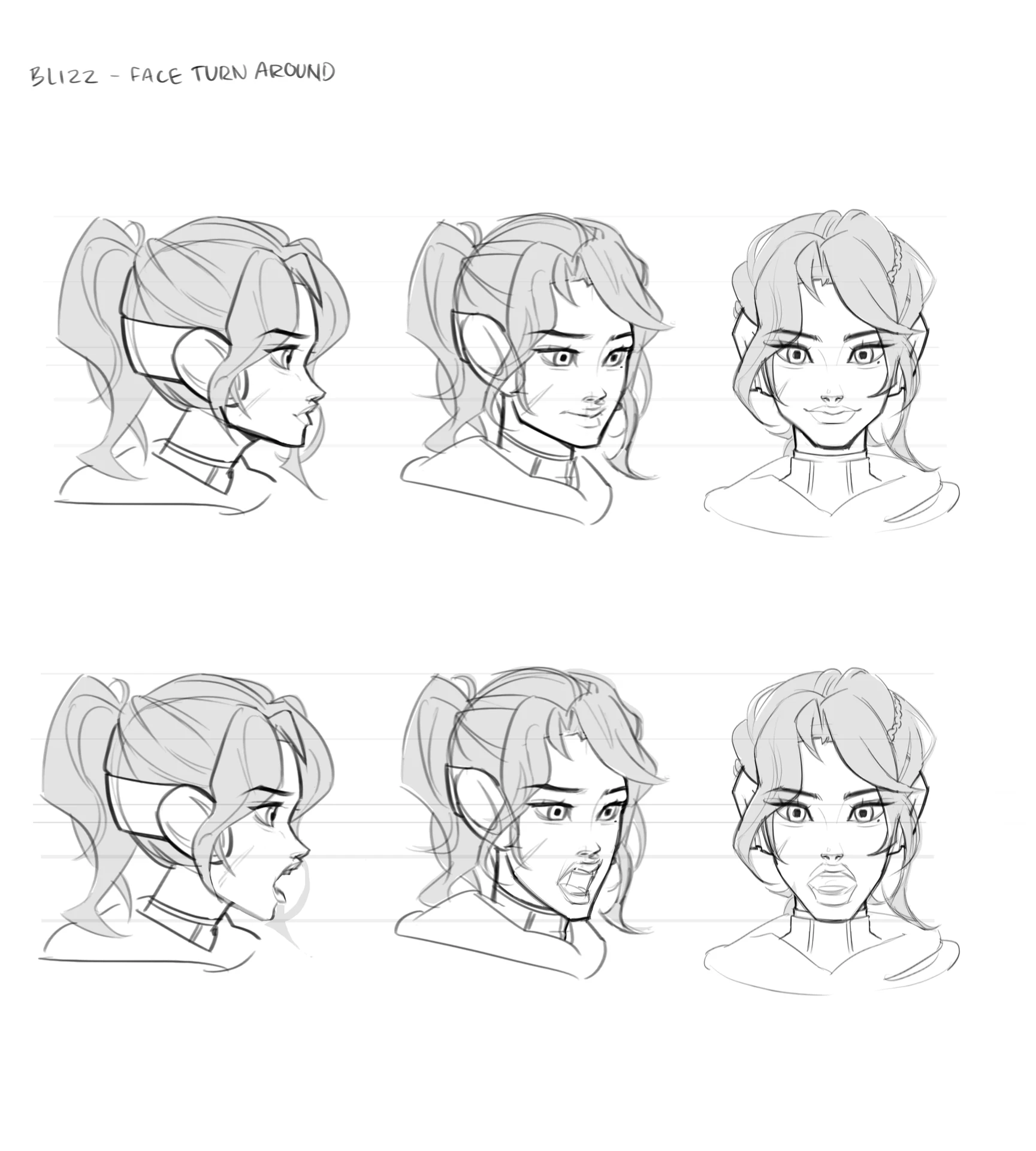
Blizz is a high-mobility Striker designed around speed, precision, and evasive combat. She is a high-skill-ceiling character: fast reflexes and mechanical mastery enable high-risk, high-reward plays.
Her signature ability, Curve Ball, bends the Power Ball along a controlled arc. It can create unexpected scoring angles, safely pass to teammates, redirect threats, and help Blizz recover the ball.

08 / Production
I created the original design documentation and game pillars, then collaborated with two artists to pitch the game to faculty. It was selected as one of four projects from twelve pitches.
With a team of more than twenty people, we refined the core systems. I also developed a playable multiplayer prototype independently.
I oversaw asset and gameplay development, helped onboard engineers, and collaborated with UI/UX designers as the project moved toward its final build.
09 / My contribution
Led a 30+ person team from prototype to production; defined the gameplay vision, character classes, and combat roles.
Created the initial game design documentation, core mechanics, a paper prototype, and a playable multiplayer prototype in Unity.
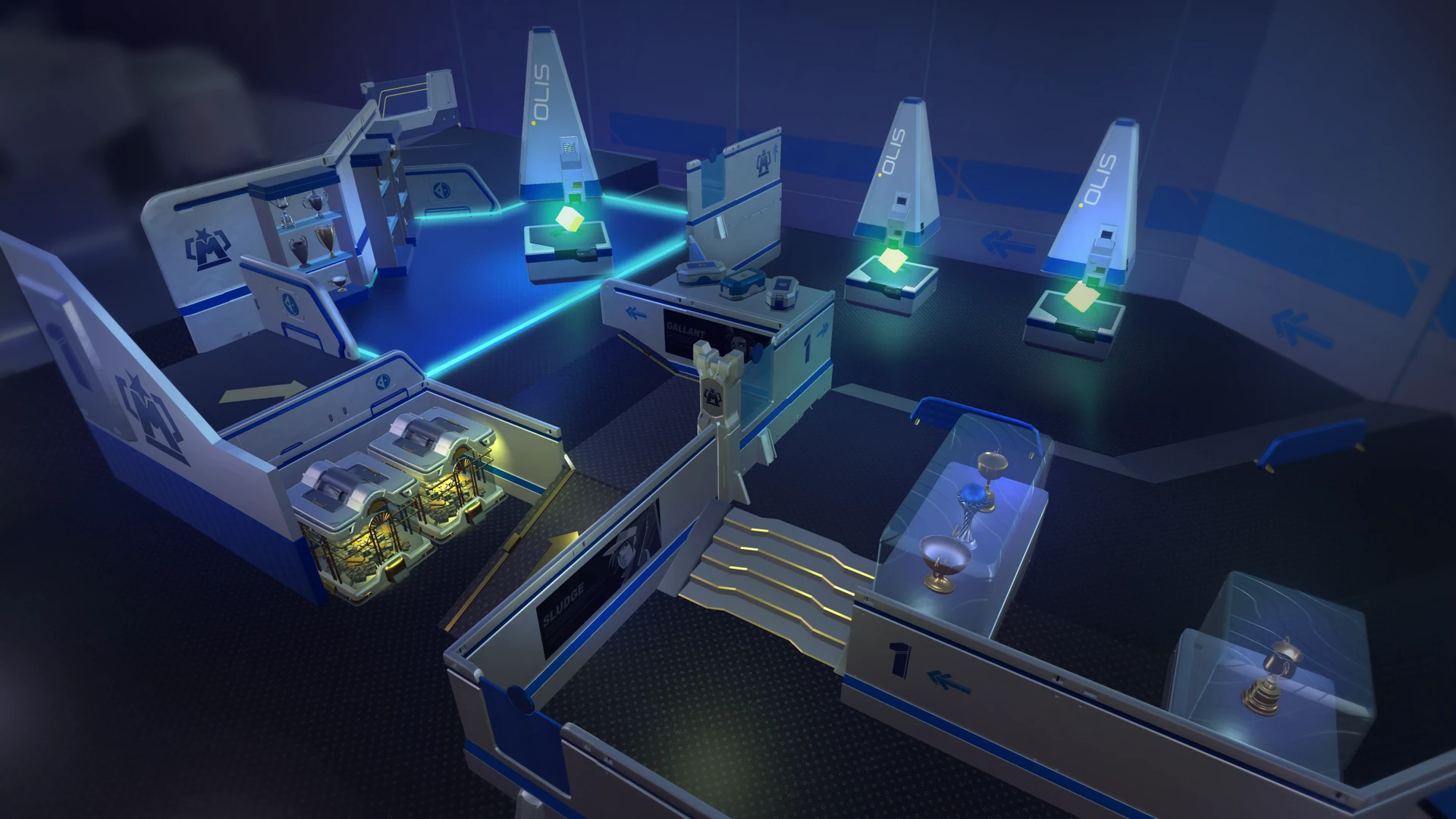
Whiteboxed Ring City Colosseum to establish scale, flow, pathing, and combat goals; supervised iterations through team review and player feedback.
Diverse Champions representing a wide variety of playstyles and real-world communities.
Fast-paced combat designed around dynamic battlefields and immediate player decisions.
A team-based ball objective combined with a third-person character shooter, built for coordinated play.
10 / Team credits
Ring City Champions was developed by a 30+ person team across game design, programming, environment art, character art, UI/UX, music, animation, and production. The poster records the team behind the Spring 2024 project.
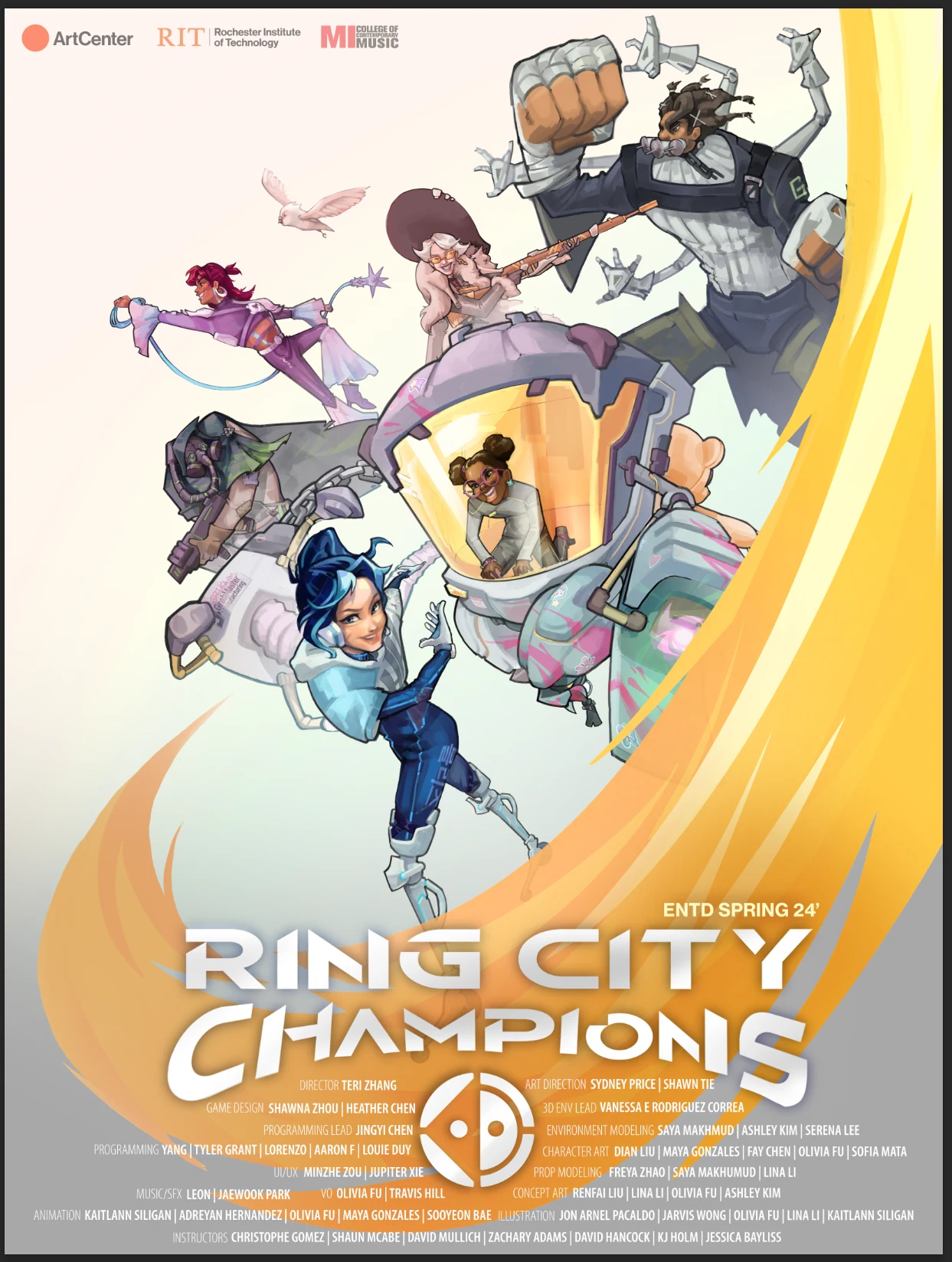
Original Ring City Champions team poster · ENTD Spring ’24